Why Battery Energy Storage Is becoming essential for Renewable Energy
As solar and wind capacity continues to expand globally, battery energy storage systems (BESS) are becoming a key component of modern power systems. Energy storage allows renewable energy to be dispatched when demand is highest, helping reduce curtailment, improve grid flexibility, and unlock additional revenue streams for asset owners.
In many markets, renewable production already exceeds grid capacity at certain times of the day. Without storage, valuable clean energy is lost. BESS enables developers and asset owners to store excess solar or wind energy and deliver it later, supporting grid stability while improving project economics.
It all starts from designing the right storage solution that takes into consideration many factors. The real challenge is not only determining the correct battery size, but understanding how different configurations and operating strategies impact project revenues and long-term costs.
Selecting the optimal BESS setup requires balancing:
- market opportunities
- technical constraints
- battery degradation and lifecycle behaviour
- long-term operational performance and revenue potential
Introducing 3E’s BESS Revenue Optimisation Tool
To support developers and investors in this complex process, 3E has developed an in-house BESS revenue optimisation tool designed to evaluate the most profitable configuration for both standalone battery storage projects and hybrid renewable plants.
Rather than focusing solely on battery sizing, the tool simulates multiple operational and market scenarios to assess how different configurations impact revenues, costs, and long-term performance.
By combining advanced technical modelling with real-world operational data, the tool allows clients to compare different storage strategies and revenue opportunities before making investment decisions.
The tool builds on years of global advisory experience in BESS project development and leverages operational insights derived from battery storage assets monitored through our digital asset management platform SynaptiQ.
BESS modelling based on market and technical conditions
The analysis integrates multiple factors that influence storage performance and project profitability, including:
- National electricity market data (adaptable to different European markets)
- Energy price volatility and market opportunities
- Battery manufacturer specifications
- Site characteristics and terrain conditions
- Grid connection constraints
- Operational strategies and dispatch profiles
Through this modelling approach, the tool evaluates different battery sizes, durations, and operational strategies, allowing developers to identify which configuration delivers the best financial outcome for their project.
Evaluating revenue stacking and long-term performance of your battery project
Beyond identifying a suitable battery configuration, the analysis provides a detailed view of how the asset will perform technically and economically over its lifetime.
Using advanced technical modelling, our experts evaluate factors such as battery degradation, capacity evolution, and operational behavior across different scenarios.
The report provides insight into:
- Potential revenue stacking opportunities (energy arbitrage, ancillary services, capacity markets)
- Performance and operational strategy for hybrid or standalone battery projects
- Battery degradation and capacity evolution over time
- Daily operational behaviour of the battery system across its lifetime (up to 20 years)
By modelling multiple operational pathways, the analysis shows how different strategies impact the profitability of the battery asset, helping investors understand the financial implications of each option.
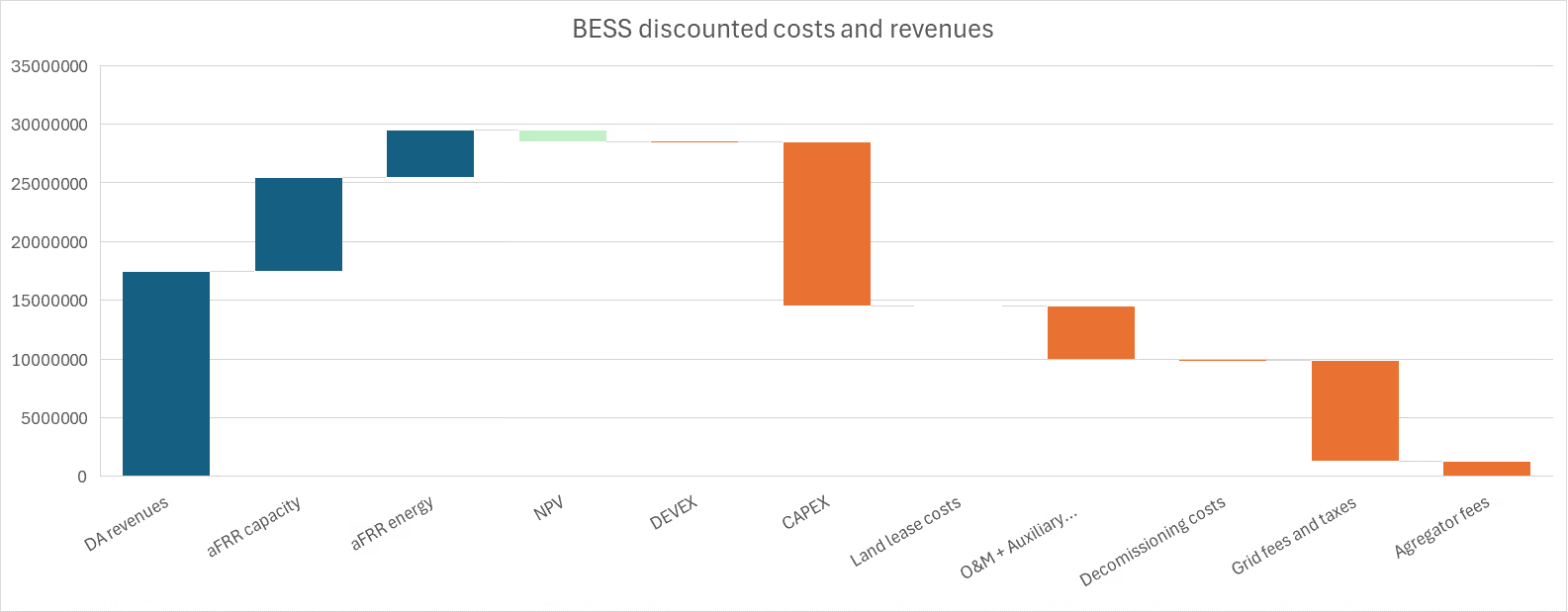
The analysis provided by the tool delivers a clear breakdown of expected revenues and lifecycle costs for the battery project under the selected operating scenario.
The example below illustrates how different revenue streams and cost components contribute to the overall financial performance of a BESS asset, andits revenue stacking over time.

Supporting smarter storage investments
As renewable penetration increases and energy markets evolve, battery storage optimisation will play a central role in enabling a flexible and resilient energy system.
Understanding how storage assets generate revenue over time, along with determining their size, is becoming essential for successful project development.
By combining market intelligence, technical expertise, and long-term operational modelling, this tool helps developers and investors make more informed decisions and maximise the value of their storage projects.
Download the full report
To explore the methodology and insights behind our analysis, download the full report on BESS revenue optimisation and battery configuration strategies.
The report explains how our tool evaluates market conditions, technical parameters, battery degradation, and revenue opportunities to identify the most profitable storage configuration for your project, illustrated through a real-world case study.
Download the report and contact our experts to request a tailored BESS revenue and optimisation analysis for your project